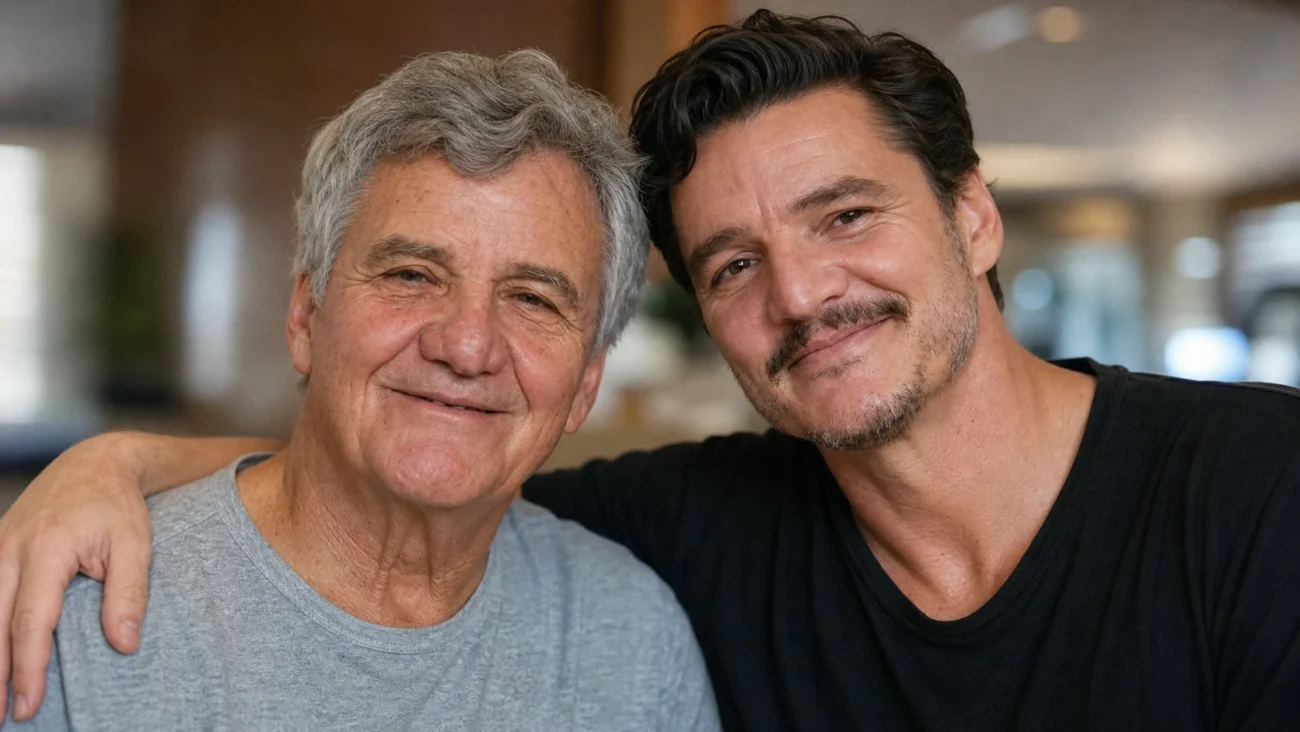
José Balmaceda Riera built his career at the front edge of modern fertility medicine before becoming linked to one of the most serious reproductive-ethics scandals in the United States. The Chilean physician is also widely known as the father of actor Pedro Pascal, yet his own life reaches far beyond that family connection. It includes political exile under Augusto Pinochet, medical training in Chile and the United States, research in assisted reproduction, a return to Chile, and decades of legal scrutiny connected to the University of California, Irvine fertility clinic.
Born in Santiago in 1948, Balmaceda became a reproductive endocrinologist during a period when in vitro fertilization and related treatments were changing the possibilities available to people experiencing infertility. His professional record includes research, clinical work, and the training of other doctors. It also includes unresolved questions about his responsibility for unauthorized egg and embryo transfers at a fertility center he helped lead.
A fair biography must hold both parts of the story together. Balmaceda was a refugee who rebuilt his career after fleeing a dictatorship, a physician who contributed to fertility medicine, and a father whose children became successful in medicine and entertainment. He was also a senior figure in a clinic where patients’ reproductive material was used without proper consent, causing harm that lasted for decades.
Early Life and Family Background
José Pedro Balmaceda Riera was born on August 22, 1948, in Santiago, Chile. He was 77 years old as of July 2026. Public biographical records describe him as Chilean, although his long residence and professional work in the United States became an important part of his adult life.
He grew up in a large family in Santiago. His father was associated with the timber business, while his mother operated a women’s clothing boutique. These details suggest a commercially established household, but little reliable information has been published about Balmaceda’s childhood beyond his schooling and family background.
Balmaceda attended San Ignatius in Santiago before entering medical school at the Pontifical Catholic University of Chile in 1967. He graduated in 1974 and began training in obstetrics and gynecology at the University of Chile’s clinical hospital. His early medical career coincided with a period of political violence and institutional upheaval following the 1973 military coup.
Marriage to Verónica Pascal Ureta
Balmaceda married Verónica Pascal Ureta, a Chilean child psychologist. She came from a politically connected family and was related to Andrés Pascal Allende, a leader of the Revolutionary Left Movement and a nephew of deposed Chilean president Salvador Allende.
The couple had four children: Javiera Balmaceda, Pedro Pascal, Nicolás Balmaceda, and Lux Pascal. Their family life was shaped by migration, political danger, professional ambition, and long periods of adjustment in different countries.
José and Verónica later separated. Verónica died in 1999, a loss that deeply affected their children, especially Pedro. José’s later romantic life has not been widely documented, and a current spouse or partner is not publicly confirmed.
Escape From Chile
The Balmaceda family left Chile after the military dictatorship began targeting political opponents and people associated with resistance groups. Pedro Pascal has explained that his parents were young and politically liberal rather than major revolutionary figures. Their danger came partly from their personal connections and partly from a specific act of assistance.
According to Pedro’s account, a priest brought an injured opponent of the regime to the family home. José, who was then working as a hospital resident, provided medical care. After security forces captured people connected to the incident, José and Verónica realized they were at risk.
The couple went into hiding with their two young children, Javiera and Pedro. They eventually sought asylum at the Venezuelan embassy in Santiago and were allowed to leave Chile. The family first went to Denmark, where Pedro spent part of his infancy.
Their time in Denmark was brief. José received an opportunity to continue his medical training in the United States, and the family relocated to Texas. The move allowed him to rebuild a career that had been interrupted by political exile.
Medical Training in the United States
Balmaceda continued his obstetrics and gynecology residency at the University of Texas Health Science Center in San Antonio. He completed the program in 1980 and later received a Rockefeller Foundation fellowship in reproductive endocrinology.
Reproductive endocrinology focuses on fertility, reproductive hormones, and conditions affecting a person’s ability to conceive. Balmaceda entered the specialty during a period of rapid development. The first birth resulting from in vitro fertilization had occurred only a few years earlier, and doctors were testing new methods for retrieving eggs, achieving fertilization, and transferring embryos.
At the University of Texas, Balmaceda worked closely with Argentine physician Ricardo Asch. Their research and clinical work centered on assisted reproduction, including a procedure known as gamete intrafallopian transfer, or GIFT.
GIFT involved retrieving eggs from a patient, combining them with sperm, and placing both into a fallopian tube. Fertilization was intended to take place inside the body rather than in a laboratory dish. The procedure required surgery and was suitable only for selected patients, but it attracted attention during the 1980s as an alternative to conventional IVF.
Fertility Research and Professional Recognition
Balmaceda published research related to ovarian stimulation, embryo transfer, egg retrieval, and early embryonic development. His work included animal research as well as studies of fertility-treatment outcomes in human patients.
He also trained physicians from Latin America and maintained professional connections with Chile. Colleagues credited him with helping introduce assisted-reproduction methods and supporting fertility training in the region.
In 1986, Balmaceda and Asch moved to California and opened a private fertility practice. Their work later became connected to the University of California, Irvine. Sergio Stone, a physician Balmaceda had known since his school years in Chile, joined them at the Center for Reproductive Health.
The center became well known and attracted patients who were willing to travel long distances and pay substantial fees for a chance to conceive. The doctors combined private practice, university appointments, clinical treatment, and medical research. That structure brought professional success but also created serious problems involving financial controls, recordkeeping, patient consent, and university oversight.
The UC Irvine Fertility Scandal
The public learned about major problems at the fertility center in 1995. Clinic records and whistleblower accounts indicated that eggs taken from some patients had been used to treat other patients without the original patients’ knowledge or permission.
The allegations involved more than isolated paperwork errors. Women who had undergone hormone treatment, anesthesia, and egg-retrieval procedures later learned that some of their eggs may have been transferred to strangers. Other patients were told they were receiving reproductive material from consenting donors when the original patients had not agreed to donate.
One of the best-known cases involved Renée Ballou. Doctors retrieved 22 eggs from her during treatment in 1987. Records later indicated that four of those eggs were given to another patient, who became pregnant and gave birth to a son.
Ballou had not consented to donating her eggs. She learned about the transfer years later after a reporter contacted her. DNA testing eventually confirmed that she was the child’s genetic mother, while the woman who had carried and raised him had also been misled by the clinic.
Investigations suggested that many patients may have been affected and that several children were born following unauthorized transfers. Exact totals remain uncertain because records were missing, incomplete, or difficult to reconstruct.
The University of California ended its relationship with the doctors and faced a large number of lawsuits. The institution eventually paid millions of dollars to settle claims connected to the clinic. Patients also pursued cases against the physicians and other parties.
Balmaceda’s Response and Legal Position
Balmaceda denied knowingly participating in unauthorized egg or embryo transfers. His representatives argued that he spent much of his time at a separate clinic location after 1989 and did not knowingly remove or implant reproductive material without consent.
That denial remains part of the public record. It is also true that university investigations, patient files, and civil claims connected the clinic’s leadership to serious misconduct. Balmaceda was one of the senior doctors responsible for the operation, even though the extent of his direct involvement in each disputed transfer was never established through a criminal trial.
He was not convicted of stealing eggs or embryos. At the time many of the procedures occurred, California did not have a criminal law written specifically to address the unauthorized transfer of human eggs or embryos.
The scandal helped expose that gap. California later made the nonconsensual use of reproductive material a criminal offense and created stronger civil remedies for affected patients.
Return to Chile
Balmaceda left the United States for Chile in 1995 while investigations and lawsuits were developing. He initially described the trip as a visit connected to his mother’s health. His wife and younger children later joined him, while Javiera and Pedro remained in the United States.
Federal authorities charged him with offenses connected mainly to financial and tax matters. He did not return to face those charges at the time and was treated by American authorities as a fugitive.
Back in Chile, Balmaceda resumed work in reproductive medicine. He became associated with Clínica Las Condes in Santiago and continued publishing fertility research. His return caused debate within the Chilean medical community.
Some colleagues defended him as a respected specialist who had trained doctors and helped develop assisted-reproduction programs. Others believed the allegations from California raised questions that could not be separated from his professional standing.
Arrest in Argentina and the Long-Running Case
In January 2001, Argentine authorities arrested Balmaceda at Ezeiza International Airport near Buenos Aires. The United States sought his extradition on federal charges connected to the California fertility operation.
He was released on bail and ordered to remain in Argentina while the legal process continued. He later failed to appear for a hearing and returned to Chile. Extradition did not occur, and the American case remained unresolved for roughly two more decades.
During those years, Balmaceda maintained a much lower public profile than his increasingly famous son. Medical publications showed that he continued working in fertility medicine in Chile, but clear information about the later stages of his career is limited.
The 2022 Tax-Fraud Plea
Balmaceda returned to the United States in 2022 and surrendered to federal authorities in California. His appearance followed negotiations that allowed him to resolve part of the long-running case.
He admitted underreporting income received through the fertility practice during the early 1990s. The plea covered tax fraud rather than the unauthorized use of eggs or embryos.
Court records associated with the agreement stated that he had failed to report more than $64,000 in income for 1991 and more than $52,000 for 1992. He agreed to pay tax liabilities linked to those amounts.
The plea did not determine whether he personally carried out the disputed reproductive procedures. It also did not erase the findings, patient accounts, and civil settlements tied to the clinic. The result was a limited criminal resolution to a much broader medical scandal.
Children and Family Achievements
José Balmaceda’s four children followed different professional paths. Javiera Balmaceda became a film and television executive with experience in Latin American and international production. Her credits include senior work connected to major streaming projects and the acclaimed film Argentina, 1985.
Pedro Pascal became the most publicly recognized member of the family. Born José Pedro Balmaceda Pascal in Santiago on April 2, 1975, he built an acting career through stage work and television before gaining wider recognition in Game of Thrones and Narcos. He later starred in The Mandalorian, The Last of Us, and several major films.
Nicolás Balmaceda chose medicine. Public comments from Pedro indicate that Nicolás entered advanced work connected to pediatric neurology, though he has kept his personal and professional life largely private.
Lux Pascal became an actor and trained in Chile and at the Juilliard School in New York. She has worked in theater, television, and film and has spoken publicly about her identity and her close relationship with her siblings.
Pedro has described his father as an important figure in his childhood. He has recalled attending movies, concerts, and sporting events with José while growing up in Texas. At the same time, Pedro has spoken about the fear and instability caused when his parents abruptly left the United States during the fertility investigation.
Net Worth and Income Sources
José Balmaceda Riera’s net worth is not publicly confirmed. Websites that attach exact wealth figures to his name generally do not provide dependable evidence such as financial disclosures, verified property records, or court filings that show his present assets.
His known income came from medical practice, university work, fertility treatment, research, and professional appointments. During the height of his California career, assisted-reproduction procedures could generate substantial fees, but gross clinic income does not reveal what Balmaceda personally retained.
Any estimate would also need to account for relocation, legal expenses, civil litigation, taxes, and the passage of time. For those reasons, a precise net worth figure would be speculation.
Current Status and Public Image
As of July 2026, José Balmaceda Riera is 77 years old. His recent place of residence and current employment are not publicly confirmed, though much of his life after 1995 has been centered in Chile.
Historical records show that he continued working in reproductive medicine after returning to Santiago. They do not clearly establish whether he remains clinically active, holds a current leadership role, or has retired.
His public image remains divided. Within his family story, he is remembered as a father, doctor, and political exile who helped his family escape a dictatorship. Within medical history, he is associated both with early fertility research and with a clinic that failed patients in profound ways.
The renewed attention surrounding him comes largely from Pedro Pascal’s fame and from continued reporting on people affected by the Irvine scandal. Modern DNA testing has allowed some families to uncover genetic relationships created by disputed transfers, showing that the case’s consequences did not end with the clinic’s closure.
Frequently Asked Questions
Who is José Balmaceda Riera?
José Balmaceda Riera is a Chilean reproductive endocrinologist and the father of Pedro Pascal. He is known for his work in assisted reproduction, his family’s political exile, and his connection to the UC Irvine fertility scandal.
When was José Balmaceda Riera born?
He was born on August 22, 1948, in Santiago, Chile. He was 77 years old as of July 2026.
Who was José Balmaceda Riera married to?
He was married to child psychologist Verónica Pascal Ureta. They later separated, and Verónica died in 1999. A later spouse or current partner is not publicly confirmed.
How many children does José Balmaceda Riera have?
He has four children: Javiera Balmaceda, Pedro Pascal, Nicolás Balmaceda, and Lux Pascal. Their careers include film and television production, acting, and medicine.
Was José Balmaceda Riera convicted over the fertility scandal?
He was not convicted of stealing or improperly transferring eggs or embryos. In 2022, he admitted tax fraud connected to income from the fertility practice.
Is José Balmaceda Riera still a doctor?
He continued working in reproductive medicine after returning to Chile, but his present clinical status is not publicly confirmed. Available historical records do not establish whether he is still practicing in 2026.
What is José Balmaceda Riera’s net worth?
His net worth has not been reliably reported. Exact figures published by unsourced celebrity websites should be treated as speculation.
Conclusion
José Balmaceda Riera’s life contains achievements, hardship, and serious controversy. He escaped political danger in Chile, completed advanced medical training in the United States, and contributed to the growth of assisted reproduction during its early years.
His career cannot be separated from the UC Irvine fertility scandal. Patients lost control over deeply personal reproductive decisions, and some families lived for decades with hidden genetic relationships and incomplete records. Balmaceda denied knowingly taking part in unauthorized transfers, but his leadership position placed him within a clinic whose failures became part of medical and legal history.
His relationship to Pedro Pascal explains much of the current public interest, yet José’s story deserves to be understood on its own terms. It is a story about exile, scientific ambition, institutional trust, and the lasting consequences that follow when consent fails.
As of 2026, important parts of his current life remain private. What is publicly established leaves a complex reputation: a skilled physician and devoted family figure whose professional legacy remains permanently tied to one of America’s most troubling fertility cases.
