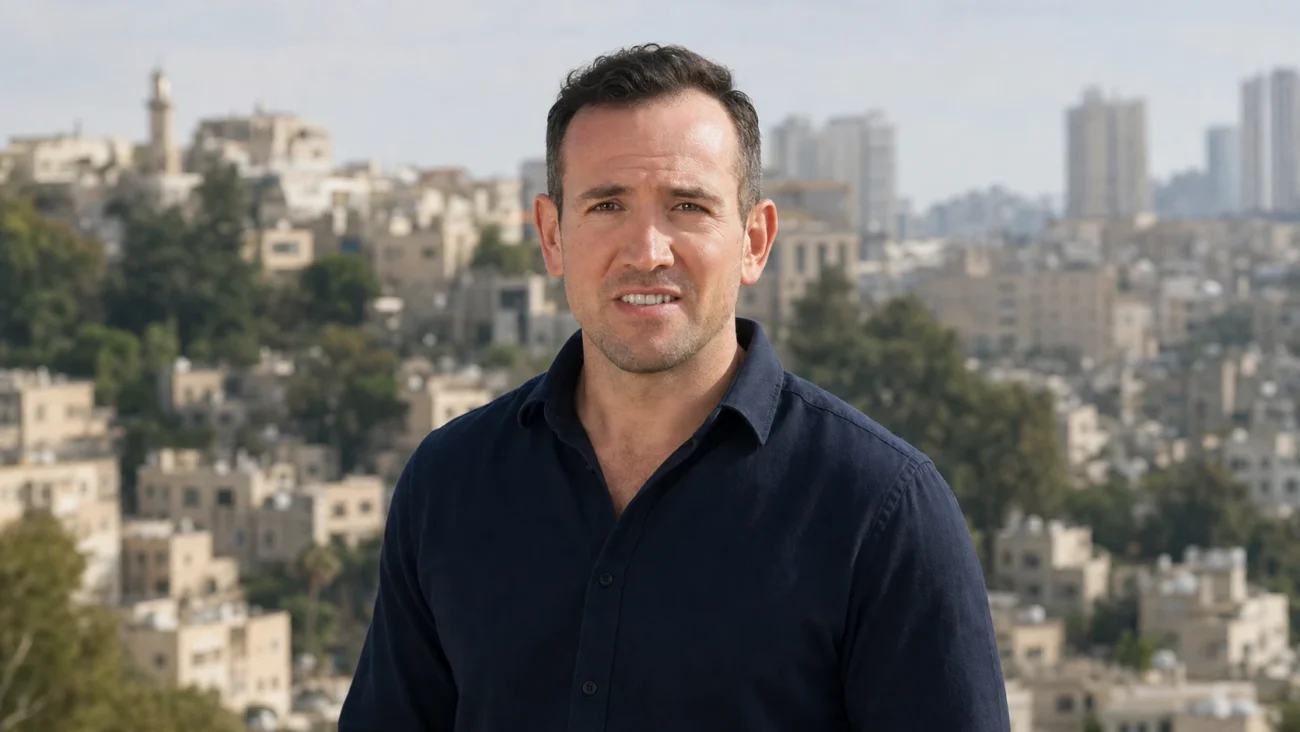
Hugo Bachega is a Brazilian-born journalist known for reporting from wars, political crises and major international news events for the BBC. His work has taken him from Brazilian election campaigns and unrest in Egypt to the war in Ukraine and conflicts across the Middle East. He became familiar to a much wider audience in October 2022, when a Russian missile attack interrupted his live television report from Kyiv and forced him and his crew to seek shelter.
That dramatic broadcast made Bachega recognizable, but it represents only one part of his career. He had already spent more than a decade covering politics, economics and conflict for international news organizations. By 2024, he was working from Beirut as the BBC’s Middle East correspondent, reporting on Lebanon, Syria, Israel, Hezbollah and the wider effects of regional warfare.
Public information about Bachega is concentrated on his journalism. His exact age, date of birth, parents, marital status and financial position have not been reliably confirmed. His biography is therefore best understood through the assignments he has completed, the countries in which he has worked and the risks involved in reporting from places where events can change without warning.
Early Life and Brazilian Background
Hugo Bachega was born in Brazil and later developed an international career in English-language journalism. Some professional descriptions have referred to him as a Brazilian-born British journalist, but detailed information about his citizenship history has not been publicly documented. His Brazilian origins remain an important part of his professional identity and distinguish his route into British broadcasting from that of many traditional BBC correspondents.
His exact birthplace has not been confirmed by a strong public source. São Paulo is closely connected to his early career because he began working there, but that does not establish that he was born in the city. Biography pages that assign him a precise birthplace or birth date often fail to identify the original source of the information.
Little is publicly known about Bachega’s childhood, parents or siblings. He has not made his family background a feature of his public profile, and the BBC has not published a detailed personal biography. That separation between professional reporting and private life has remained consistent as his visibility has increased.
Age and Date of Birth
Hugo Bachega’s date of birth is not publicly confirmed. As a result, his exact age cannot be stated responsibly as of 2026. Online profiles sometimes offer a birth year or an estimated age, but those claims are not supported by a verified statement from Bachega, the BBC or an authoritative public record.
His documented professional work dates back to at least 2010, when Reuters published reports under his byline from Brazil. That timeline provides context for the length of his career, but it should not be used to calculate his age. Starting dates, photographs and television appearances are not reliable substitutes for a confirmed birth record.
The lack of a public birthday is not unusual for a foreign correspondent. Bachega became known because of his reporting rather than through entertainment, electoral politics or a personality-driven media career. His employer and published work focus on his assignments, not on personal biographical details.
Education and Early Interest in the Middle East
A complete record of Bachega’s formal education has not been published. The names of his schools, university and any degrees he may hold are not publicly confirmed by authoritative sources. Claims that attach specific academic qualifications to him should therefore be treated cautiously unless supported by direct evidence.
What is known is that he spent time in the Middle East as a student. During his period in Egypt, he studied Arabic while also pursuing freelance journalism. That combination suggests a deliberate effort to understand the region through both language and direct reporting experience.
Studying Arabic would have been useful for following local media, speaking with residents and interpreting political debate, although his present level of fluency is not publicly documented. His later return to the region as a BBC correspondent shows that his connection to the Middle East was established well before his Beirut assignment.
Beginning His Career at Reuters
Bachega started his professional journalism career as an intern with Reuters in São Paulo. Reuters is known for concise reporting, close attention to attribution and the rapid verification of information for readers around the world. Those demands appear to have shaped the clear, evidence-focused style found in his later BBC work.
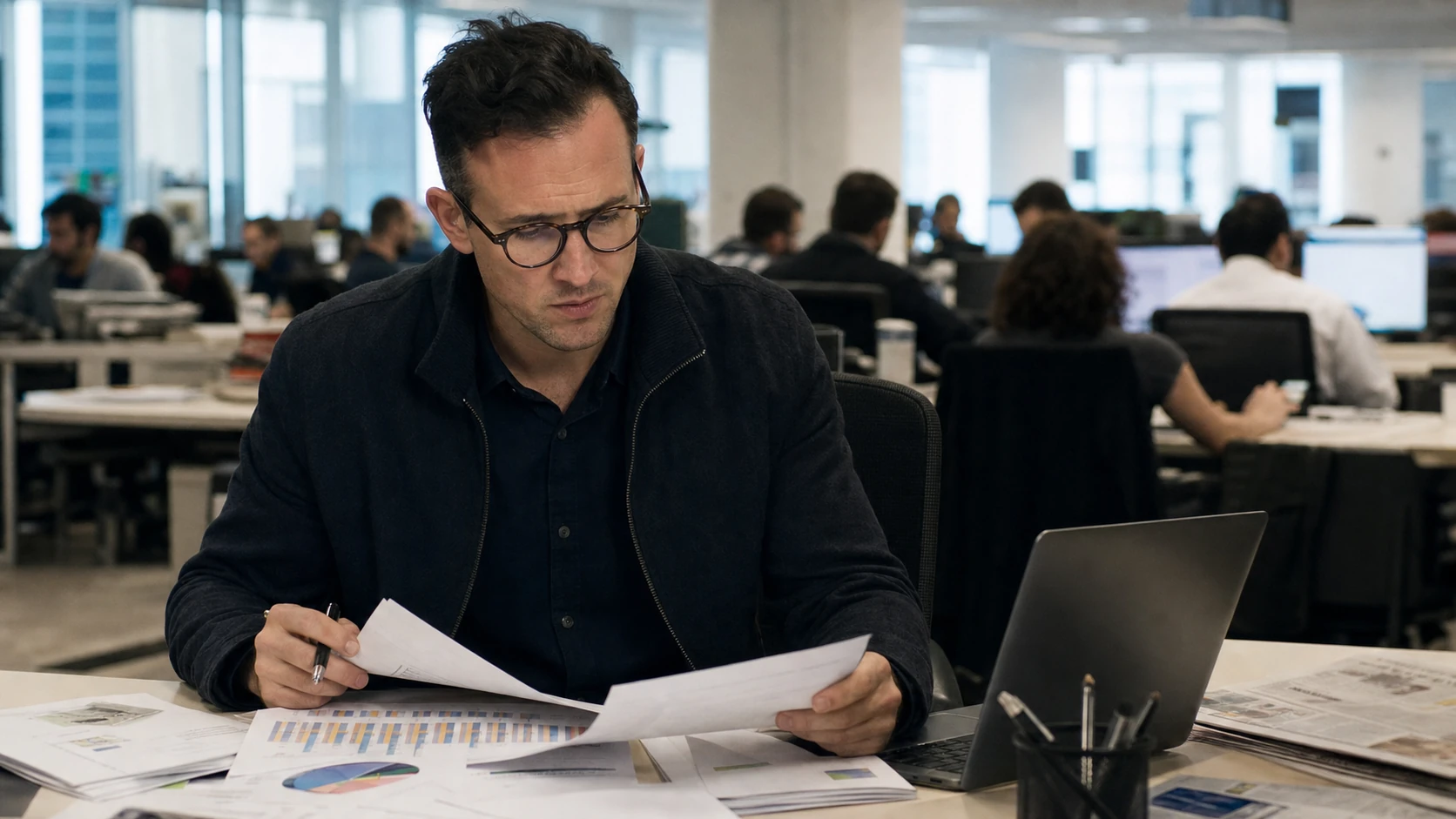
By October 2010, Bachega was reporting on Brazil’s presidential election. He covered the final stages of Dilma Rousseff’s campaign as she sought to succeed President Luiz Inácio Lula da Silva and become Brazil’s first female president. His work examined polling, campaign events, political disputes and the significance of Lula’s support.
In 2011, he also reported on technology manufacturing and investment in Brazil. One Reuters article examined discussions involving Foxconn, the production of Apple devices and a possible multibillion-dollar investment plan. The story required him to connect a corporate announcement with taxation, industrial policy, infrastructure and competition among Brazilian states.
These early assignments show that Bachega did not begin his career as a conflict correspondent. He first built experience covering elections, government decisions, business and economic policy. That foundation gave him the reporting discipline needed for later assignments where political claims and official figures could carry immediate consequences.
Cairo and Detention in Egypt
Bachega later moved to Cairo, where he studied Arabic and worked as a freelance journalist. Egypt was going through severe political instability after the 2011 uprising and the military’s removal of President Mohamed Morsi in July 2013. Demonstrations, security operations and violence made the country increasingly dangerous for both Egyptian and foreign reporters.
On August 17, 2013, Egyptian security forces detained Bachega while he was covering unrest around Ramses Square in Cairo. He was held for about seven hours before being released after the Brazilian embassy contacted Egypt’s Interior Ministry. Contemporary reports said his camera was seized during the incident.
The detention occurred during a period when numerous journalists were arrested, attacked or obstructed while covering the political crisis. Egyptian authorities and government supporters frequently accused foreign media of misrepresenting events, creating an atmosphere in which reporters could be treated with suspicion or hostility.
Bachega’s detention was an early example of the risks that would later define parts of his career. It also demonstrated that his experience in conflict reporting began years before his work in Ukraine. There is no public indication that the incident caused him to leave international journalism or abandon his interest in the Middle East.
Joining the BBC and Building an International Career
Bachega later joined the BBC’s international news operation, although the broadcaster has not published a precise date for his appointment. Professional accounts of his career place him in several major reporting centres, including London, Washington, Kyiv and Beirut. Each location exposed him to a different mix of political reporting, diplomacy and breaking news.
His work has appeared across BBC television, radio, podcasts and online articles. Live television requires reporters to explain events quickly and clearly, while written features allow more space for history, local testimony and competing political positions. Bachega has worked in both formats, moving between immediate reports and longer accounts of how conflict affects communities.
He is primarily a field correspondent rather than a studio presenter. His reports usually place witnesses, officials, civilians and political actors at the centre of the story. Even as his own name became more familiar, he continued to maintain a relatively low personal profile.
The Kyiv Missile Attack Broadcast
Bachega became internationally recognizable on October 10, 2022, while reporting live from Kyiv during Russia’s invasion of Ukraine. As he spoke to the BBC, the sound of incoming attacks became audible. He looked toward the noise, moved away from the camera and took cover with his team.
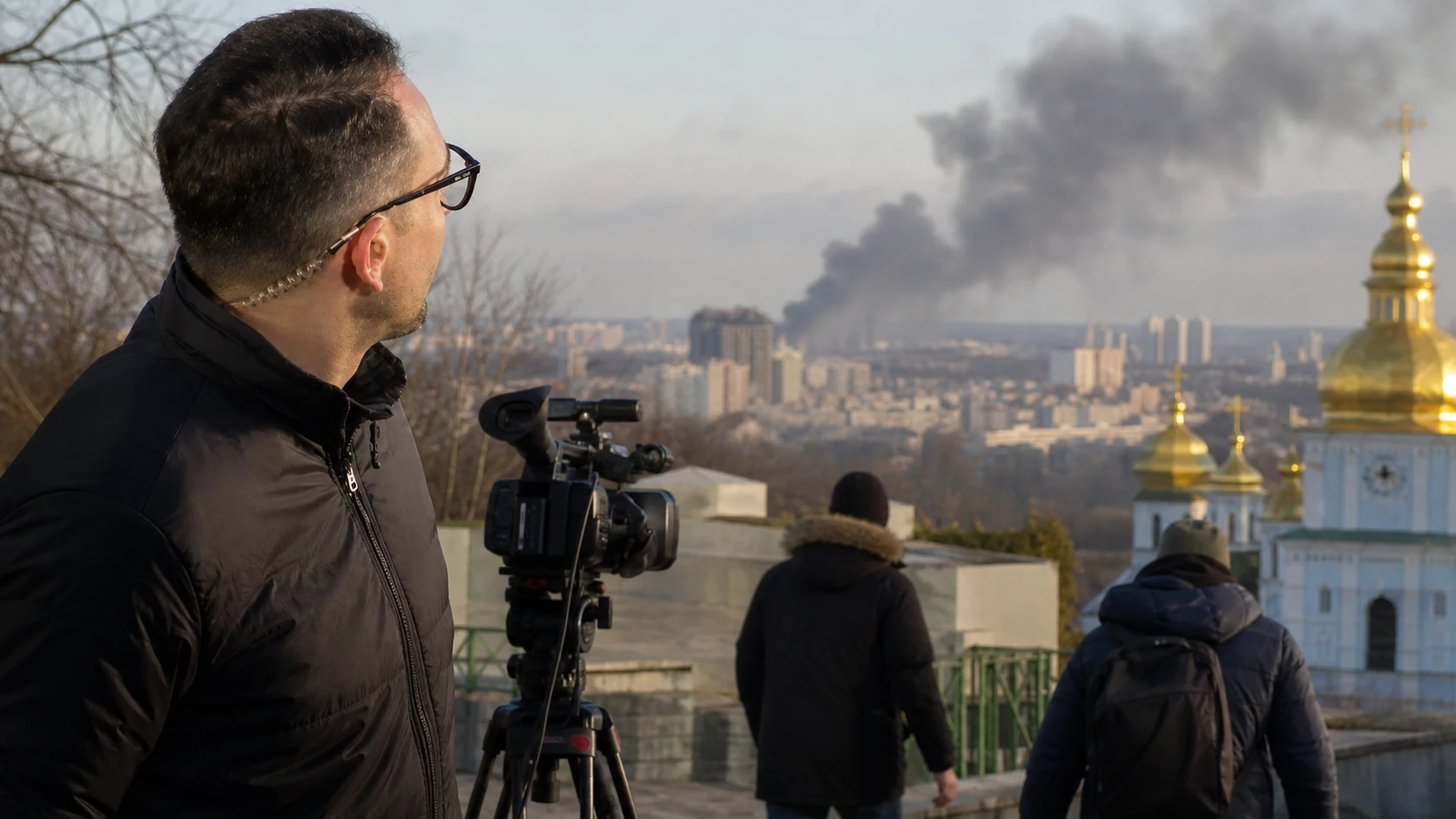
Russia was carrying out a large wave of missile strikes against Kyiv and other Ukrainian cities. The attacks followed an explosion that damaged the bridge connecting Russia with occupied Crimea. Bachega had been discussing the possibility of Russian retaliation shortly before the broadcast was interrupted.
The BBC later confirmed that it had contacted him and that he was safe. He returned to coverage from a protected indoor location once conditions allowed. Video of the interruption spread widely online and became one of the most visible examples of the danger faced by journalists covering the war.
Some social-media descriptions treated the incident as an unusual television mishap. In reality, leaving an exposed position was the correct safety response. A correspondent’s crew may include a camera operator, producer, driver, translator and security staff, all of whom must move when an immediate threat develops.
The broadcast brought Bachega public recognition, but it did not mark the beginning or end of his Ukraine reporting. He also covered military developments, liberated areas, civilian suffering and the discovery of burial sites after Ukrainian forces retook territory from Russia.
Reporting Across Ukraine
During Ukraine’s 2022 counteroffensive, Bachega reported on the rapid recapture of territory in the country’s northeast. He contributed to coverage from areas that had recently been under Russian occupation, where journalists encountered destroyed buildings, displaced residents and evidence of possible abuses.
His reporting included the aftermath of the occupation of Izium, where a mass burial site was discovered after Ukrainian forces regained control. Stories from such locations required careful language because early observations could later become evidence in investigations into war crimes. Reporters needed to distinguish what they had seen from what officials alleged or investigators had formally established.
In 2023, Bachega continued covering Ukrainian military preparations and the uncertainty surrounding a planned counteroffensive. His reports addressed the gap between public expectations and the realities of training, equipment, weather and Russian defences. He also continued to describe the effect of missile and drone attacks on civilians far from the front line.
His Ukraine work showed the two sides of war correspondence. One involved fast-moving events, live broadcasting and sudden danger. The other required patient interviews, verification and attention to what happened to ordinary people after military control changed.
BBC Middle East Correspondent
By 2024, Bachega was based in Beirut as the BBC’s Middle East correspondent. The role brought him back to a region where he had previously studied and worked as a freelancer. It also placed him near conflicts involving Lebanon, Israel, Hezbollah, Syria, Iran and Gaza.
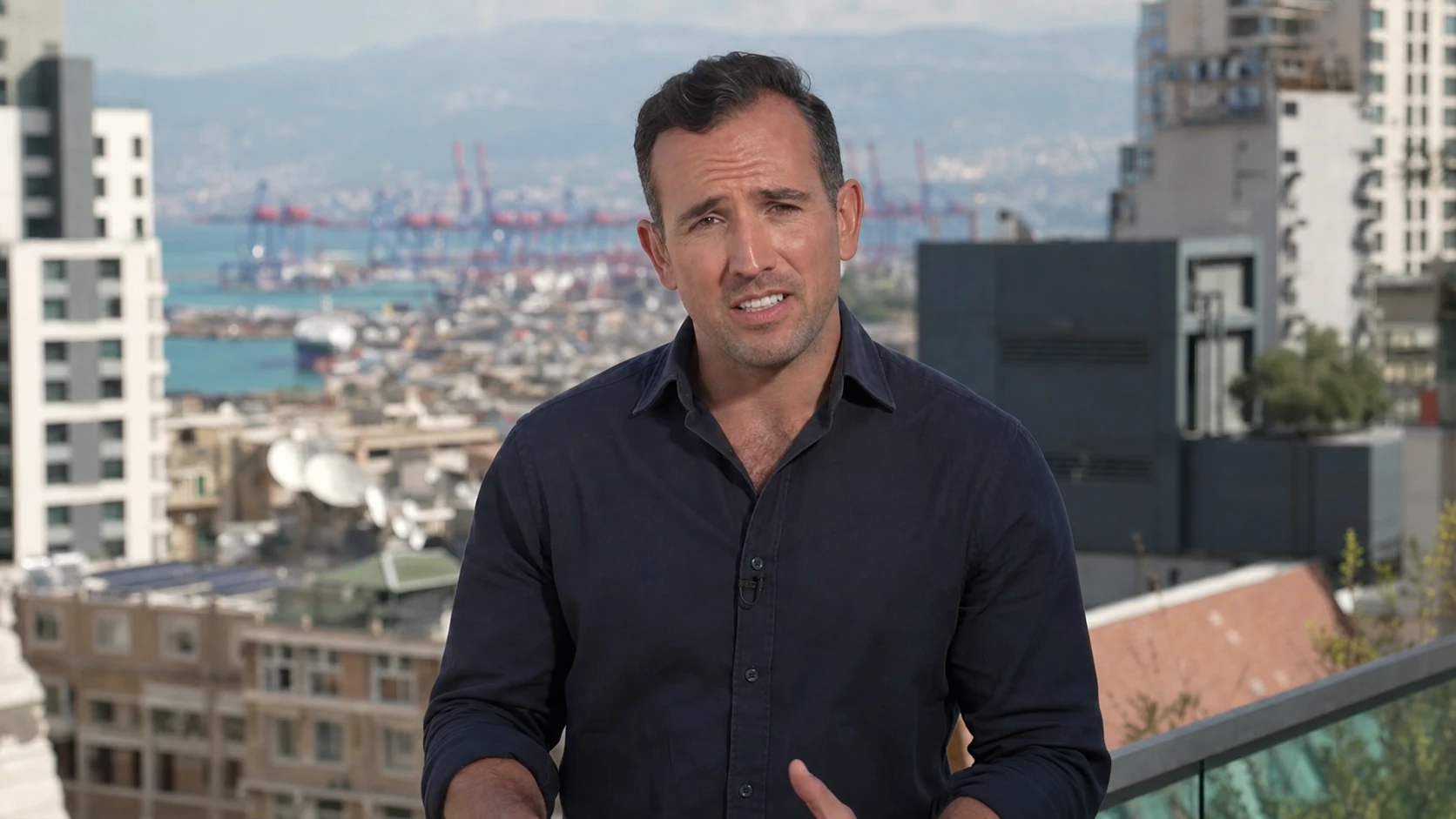
His arrival on the beat came during a period of intense regional instability following the Hamas-led attack on Israel on October 7, 2023, and Israel’s war in Gaza. Exchanges of fire between Israel and Hezbollah intensified along the Israel-Lebanon border, forcing residents from communities on both sides to leave their homes.
Bachega reported on Israeli strikes in Lebanon, Hezbollah’s attacks, civilian casualties and the growing fear of a wider war. He also examined Lebanon’s domestic difficulties, including weak state institutions, economic collapse and political divisions that existed before the fighting intensified.
When a ceasefire began in late 2024, he covered the return of displaced Lebanese residents to the south. The movement of families toward damaged towns showed that a ceasefire could stop large-scale fighting without resolving questions about reconstruction, military withdrawal, border security or Hezbollah’s weapons.
Lebanon, Hezbollah and Postwar Reporting
Bachega’s longer reporting has examined how war affects political loyalty as well as physical survival. In 2025, he travelled to southern Lebanon to explore whether Hezbollah’s supporters had changed their views after towns associated with the group suffered extensive destruction.
The assignment took him to Kfar Kila, near the Israeli border, where much of the built area had been damaged or destroyed. His report considered Hezbollah not only as an armed organization supported by Iran, but also as a political and social force with deep roots in parts of Lebanon’s Shia community.
He avoided treating destruction as automatic proof that support for Hezbollah had disappeared. At the same time, he did not assume that loyalty had remained untouched by displacement, deaths and the loss of homes. That approach reflected the value of returning to communities after the immediate crisis rather than relying only on statements from leaders.
His reporting also addressed the changes caused by the fall of Bashar al-Assad’s government in Syria in December 2024. Syria had long been central to Iran’s connection with Hezbollah and to the movement of weapons and personnel across the region. A change of power in Damascus therefore affected Lebanon, Israel, Turkey, Russia and armed groups operating across Syria.
Reporting Style and Public Image
Bachega’s public image is shaped by calm delivery, direct language and a willingness to report from dangerous locations. He usually avoids dramatic self-presentation, even when working under difficult conditions. His reports focus on what has happened, who is making a claim and what remains uncertain.
Attribution is central to his work. In conflict reporting, phrases such as “the military said,” “officials reported” or “the group claimed” tell readers that a statement comes from an interested party rather than from independent confirmation. That distinction is essential when governments and armed groups compete to control the account of an attack.
His coverage of the Middle East has also faced criticism from different political directions. Critics of the BBC have challenged language used to describe Israeli military operations, Hezbollah and civilian casualties. Such disputes often concern framing and terminology rather than proven fabrication, and they reflect the intense scrutiny applied to almost every report from the region.
Bachega’s work should be judged through the accuracy of individual reports, the quality of attribution and whether new evidence is incorporated. His career does not depend on a celebrity persona. It rests on sustained reporting from places where access is limited and reliable information is often difficult to obtain.
Marriage, Children and Private Life
Hugo Bachega has not publicly confirmed that he is married. No reliable source identifies a wife, husband or long-term partner, and he does not discuss his romantic life in his professional appearances. Claims that name a spouse without a direct statement or dependable record should not be treated as established fact.
It is also not publicly confirmed whether he has children. His parents, siblings and other relatives remain outside his media profile. This privacy is consistent with the way he has managed his public identity throughout his career.
Bachega uses his public presence mainly to share reporting and professional updates. He has not turned personal milestones into public content, and there is no clear public-interest reason to speculate about relationships that he has chosen not to disclose.
Net Worth and Income Sources
Hugo Bachega’s net worth is not publicly known. No verified financial disclosure, salary figure or asset record provides a reliable basis for estimating his wealth. Websites that attach precise net-worth figures to him generally do so without showing evidence.
His known income comes from professional journalism. He has worked for Reuters and the BBC and has also contributed to interviews, podcasts and published reports connected to his specialist experience. The terms of his contracts and any additional payments are private.
The BBC releases pay information for certain highly paid presenters and senior figures, but that does not reveal the salary of every foreign correspondent. Without confirmed figures, any estimate of Bachega’s annual income or total wealth would be speculative.
Recent Work and Current Status
As of 2026, Bachega remains publicly associated with the BBC as a Middle East correspondent. His recent reporting has continued to focus on Lebanon, Syria, Israel and the political arrangements emerging after periods of intense fighting.
His work has included reports on ceasefire negotiations, Israeli strikes in Lebanon, emergency workers killed during attacks and explosions in Damascus. These assignments show a shift from covering only the outbreak of conflict to examining the difficult period that follows, when governments and armed groups debate disarmament, reconstruction and control.
Beirut has served as his established regional base, although foreign correspondents travel frequently and may spend long periods elsewhere. His exact daily location is not always public for practical and security reasons.
Frequently Asked Questions
Who is Hugo Bachega?
Hugo Bachega is a Brazilian-born journalist and BBC Middle East correspondent. He has reported from Brazil, Egypt, Ukraine, Lebanon and Syria, covering elections, political unrest and armed conflict.
How old is Hugo Bachega?
Hugo Bachega’s exact age is not publicly confirmed. No authoritative source has published a verified date of birth, so specific ages found on general biography sites should be treated cautiously.
Where was Hugo Bachega born?
He was born in Brazil, but his exact birthplace has not been reliably confirmed. São Paulo is connected to the start of his Reuters career, not necessarily to his birth.
What happened to Hugo Bachega in Kyiv?
A Russian missile attack interrupted his live BBC report from Kyiv on October 10, 2022. He and his crew moved to shelter, and he later returned to the broadcast from a safer indoor location.
Is Hugo Bachega married?
His marital status is not publicly confirmed. Bachega has not identified a spouse or partner in reliable public sources and keeps his private life separate from his work.
What is Hugo Bachega’s net worth?
His net worth is unknown. There are no credible financial records supporting the precise estimates published by some biography websites.
Where is Hugo Bachega now?
As of 2026, he is publicly identified as a BBC Middle East correspondent and is associated with Beirut as his regional base. His assignments continue to take him across Lebanon, Syria and the wider Middle East.
Conclusion
Hugo Bachega built his career by moving from Brazilian political and economic reporting into some of the most difficult international assignments of the past decade. His work in Cairo, Kyiv and Beirut reflects a long commitment to field reporting rather than a sudden rise created by one viral television moment.
The October 2022 missile attack in Kyiv made him widely recognizable, but his strongest professional record lies in the reporting that came before and after it. He has documented changing front lines, displacement, damaged communities and the political disputes that remain when active fighting slows.
His private life is intentionally less visible. Readers looking for a confirmed birthday, spouse, children or net-worth figure will find that those details have not been publicly established. Respecting that boundary produces a more accurate biography than filling the gaps with unsupported claims.
Bachega’s public importance comes from his position as a witness and interpreter of major events. His career shows why foreign correspondence still matters: wars are reported not only through official statements and military maps, but through journalists who reach affected communities, test competing accounts and continue following a story after global attention begins to move elsewhere.
