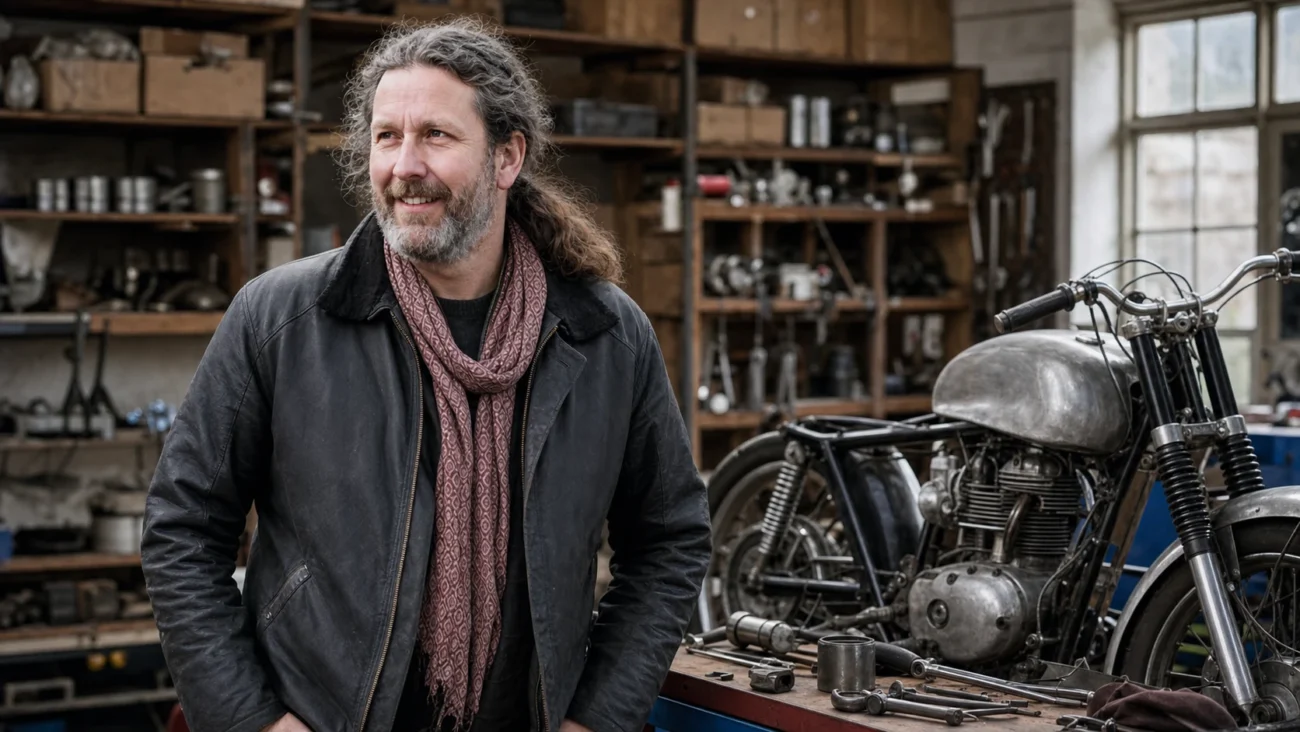
Sam Lovegrove became familiar to television viewers as the calm, highly skilled engineer beside Henry Cole on Shed & Buried. While Cole searched barns, sheds, and garages for neglected vehicles, Lovegrove often supplied the technical judgment that decided whether an old motorcycle, car, tractor, or engine could be saved. His quiet delivery and practical clothing made him look like a natural workshop character, but his background reaches far beyond television.
Lovegrove has worked in vehicle restoration, motorsport gearbox design, car production, hydrogen fuel-cell development, fabrication, and specialist motorcycle engineering. He is especially respected for his work on rare British motorcycles, including Brough Superior machines, and for building or restoring vehicles that require parts no longer available from ordinary suppliers.
Public interest in him has grown since he stopped appearing regularly in the newer seasons of Shed & Buried. Viewers often ask about his age, education, family, relationship with Henry Cole, current work, and whether he plans to return to television. Some parts of his life are well documented, while others remain private or not publicly confirmed.
Early Life and Interest in Motorcycles
Lovegrove developed an interest in machines at a young age. In a profile published by Classic Bike magazine in 2015, he recalled having motorcycles from around the age of 10 and helping in local garages by the time he was about 12. That early exposure gave him practical experience before he received any formal engineering education.
One of his first road-going projects showed the resourcefulness that later became central to his career. He combined an AP50 rolling chassis with an SS50 engine and modified it with parts from other machines. He even made an exhaust from part of a metal bread bin and attached a Morris Minor headlamp using a coat hanger.
The motorcycle was basic, but it worked and became road legal. Lovegrove rode it from the age of 16, learning through use rather than treating the machine as a display piece. That approach remained visible in his later work: he valued mechanical function, personal history, and creative problem-solving as much as cosmetic perfection.
Before attending university, he worked as a mechanic and operated a small garage in Cornwall restoring old cars. He later acknowledged that the business was not financially successful. The experience still gave him a close understanding of workshop costs, customer expectations, and the difference between enjoying restoration and earning a dependable living from it.
Education and Engineering Training
Lovegrove studied mechanical engineering at Oxford Brookes University. The most detailed published account of his education states that he completed three years of a four-year course before financial pressure led him to accept paid engineering work. For that reason, it is accurate to say he studied mechanical engineering at Oxford Brookes, but a completed degree or honours qualification is not publicly confirmed.
His career shows that formal study was only one part of his training. He learned through garages, industrial design work, vehicle production, machining, fabrication, and years of diagnosing mechanical failures. This combination of theory and practical experience later made him especially effective on television, where he could explain a mechanical problem and then build the part needed to solve it.
Lovegrove’s professional knowledge covers both historic and modern engineering. He has used computer-aided design software while also working with lathes, mills, welding equipment, hand tools, and traditional measuring methods. That ability to move between digital design and old workshop practices became essential when working on motorcycles built many decades before replacement parts were easily available.
Engineering Career Before Television
After leaving university, Lovegrove worked in several areas of vehicle engineering. His early professional experience included motorsport gearbox design, paint spraying, and work connected to Aston Martin vehicle production. Public accounts do not provide a complete list of employers or exact dates for every position, so some parts of this period remain broadly documented rather than fully detailed.
One of the most unusual chapters in his career involved hydrogen fuel-cell vehicles. Lovegrove said he became head of design at a company working on the technology and helped develop three fuel-cell trucks and a test taxi in 1999. The taxi used a nine-kilowatt fuel-cell system and had an estimated driving range of about 70 miles.
The project placed him in an emerging area of vehicle development long before hydrogen-powered road transport became a common public topic. The company later entered administration, bringing that stage of his career to an end. Lovegrove then reconsidered the amount of time he was spending on travel, office duties, and management.
He described facing a commute of about 276 miles and frequent trips that kept him away from home. By that point, he had children and wanted to spend more time with his family. He chose to return to Cornwall and build a working life around his own workshop rather than continue in a position dominated by travel and corporate responsibilities.
Building a Workshop Career in Cornwall
Back in Cornwall, Lovegrove focused on design, fabrication, and specialist restoration. He produced gears, camshafts, and other components for old engines when original parts could no longer be bought. This work required him to study worn examples, understand the original design, and make replacements capable of surviving real use.
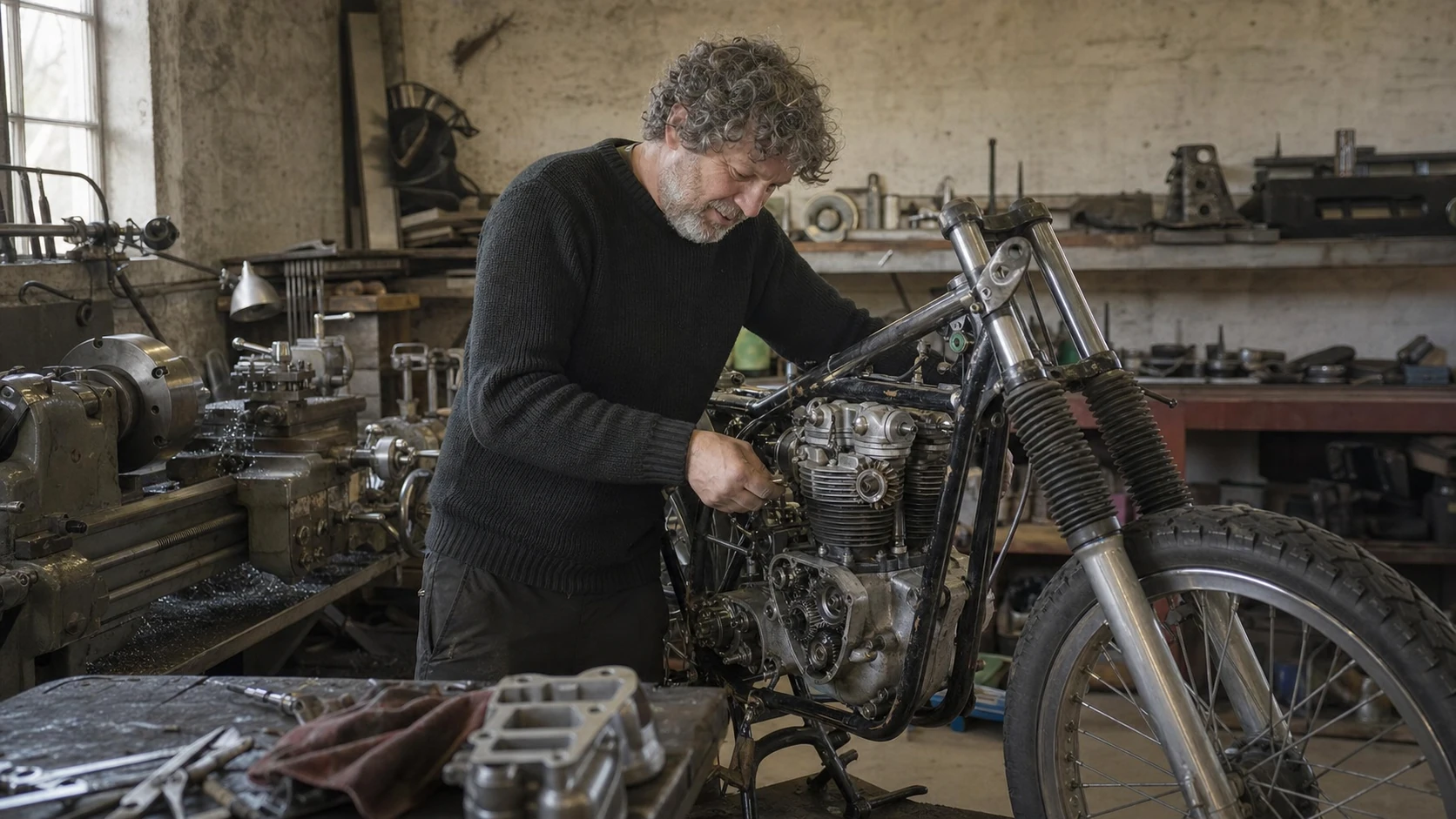
His workshop became the place where he could combine commercial jobs with personal projects. Lovegrove has never limited himself to restoring motorcycles exactly as they left the factory. He has also built specials that combine historic parts with original engineering ideas, provided the finished machine remains mechanically convincing.
One example was a custom Ariel V-twin. Lovegrove cut and joined crankcases from two Ariel VB600 engines to produce a 90-degree V-twin layout that Ariel itself had not manufactured. He planned the engine through drawings and measurements, made jigs to hold the cases in position, and completed much of the early work with files and hand tools because he did not yet own all the machinery he later acquired.
The finished motorcycle used a mixture of Ariel, Harley-Davidson, and specially made components. Rather than trying to create a flawless modern custom bike, Lovegrove wanted it to look and feel as though it belonged to an earlier period. The project reflected his interest in patina, mechanical honesty, and machines built to be ridden.
The Brough Superior Baby Pendine
Lovegrove’s reputation reached a wider audience through his work on the Brough Superior Baby Pendine land-speed motorcycle. The project took about 14 months and involved rebuilding a 750cc JAP V-twin engine, creating the rolling chassis from bare tubes, and preparing the machine for record attempts at the Bonneville Salt Flats in Utah.
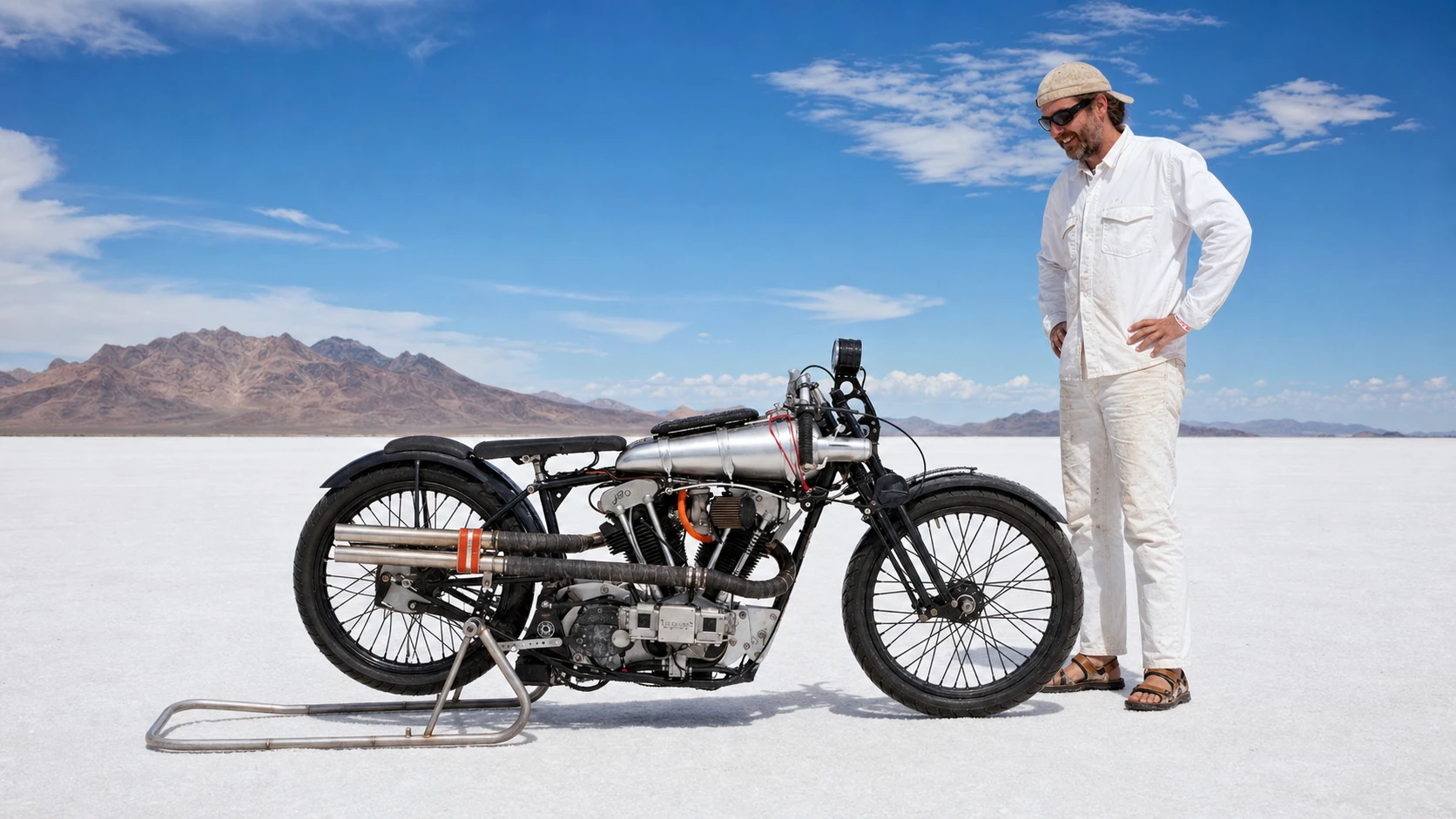
In August 2013, the Baby Pendine achieved two FIM world records and two AMA records. Motorcycle journalist Alan Cathcart recorded an average speed of 101.328 mph in one class, while Henry Cole set an AMA average of 99.780 mph in another. Lovegrove’s preparation allowed the motorcycle to complete repeated speed runs with only limited adjustments to gearing, jetting, and ignition.
The achievement was important because the bike relied on historic mechanical design rather than modern streamlining disguised as a vintage machine. Lovegrove had to work within class rules while balancing speed, reliability, fuel mixture, and the effects of running on salt. The project confirmed his standing as more than a television mechanic.
Brough Superior later identified him as a leading specialist in restoring the marque. He is also known as a collector of Brough Superior motorcycles. His knowledge of these rare machines has made him suitable for restorations where missing parts must be recreated and original material must be preserved whenever possible.
Friendship and Work with Henry Cole
Lovegrove’s work on the Baby Pendine led to his friendship and professional partnership with Henry Cole. Cole soon involved him in further motorcycle projects, including a tuned Triumph 3HW Tiger 80 intended for speed running at Elvington.
The Triumph project illustrated the pressure created by television schedules. Testing happened late, and the engine partially seized shortly before the planned run. Lovegrove repaired the damage, ran the engine in, and made conservative decisions about fuel and jetting to reduce the chance of another failure. The motorcycle later reached 89 mph.
This balance between Cole’s enthusiasm and Lovegrove’s technical caution became a central part of their screen partnership. Cole often pushed projects forward through energy, negotiation, and willingness to take risks. Lovegrove assessed wear, repair costs, and mechanical limits before turning an optimistic idea into a working vehicle.
Their friendship continued outside the original programme format. Later television material described Lovegrove as Cole’s best friend, and the two appeared together again after Lovegrove had stopped travelling regularly for Shed & Buried. There is no dependable evidence that their working relationship ended because of a personal dispute.
Television Career and Shed & Buried
Shed & Buried introduced Lovegrove to a large audience. The series followed him and Cole as they travelled around Britain looking for vehicles and mechanical objects stored in private sheds, barns, and workshops. Their aim was usually to buy something overlooked, restore it, and sell it.
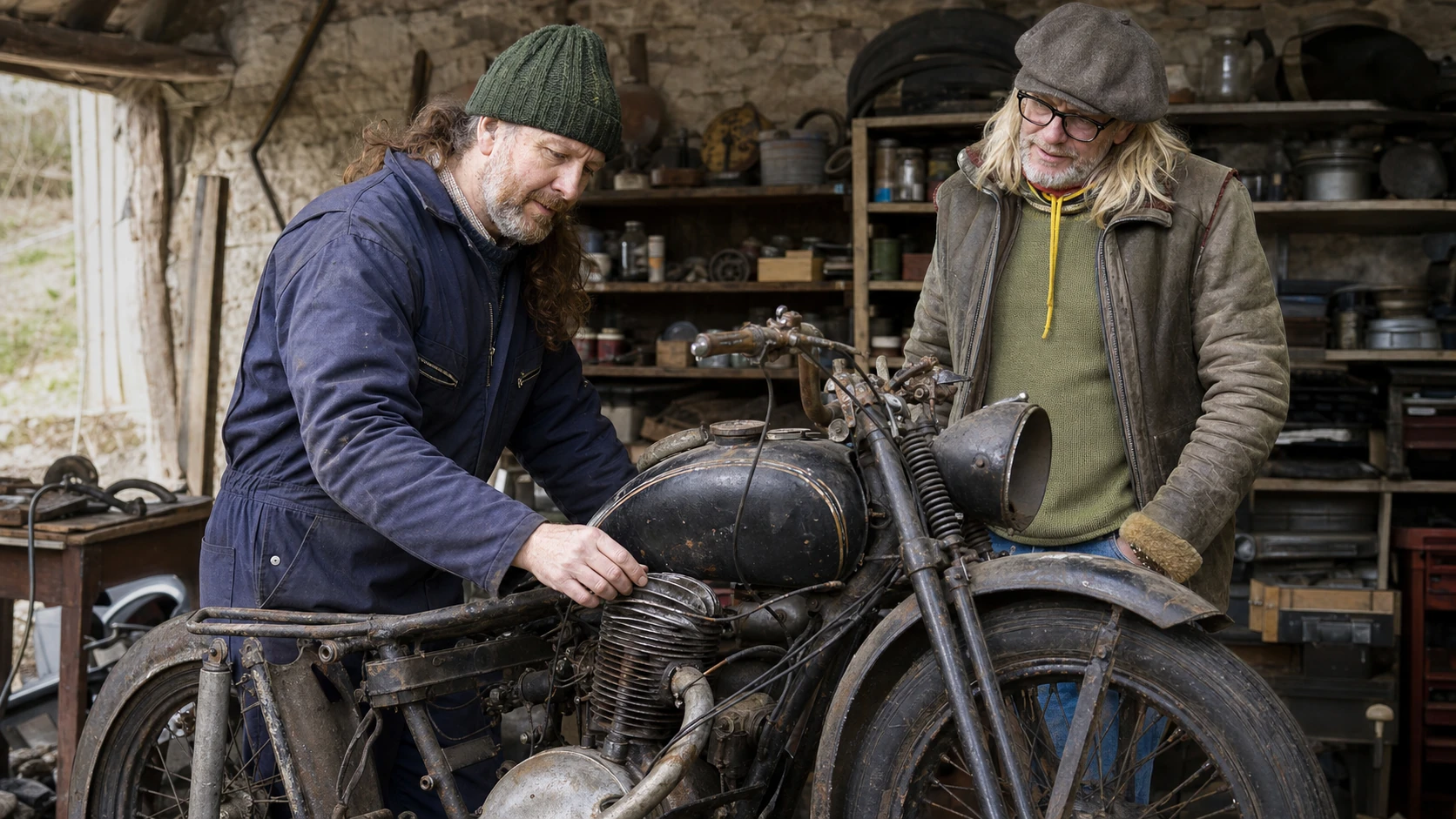
Lovegrove’s role was different from that of a conventional presenter. He inspected engines, frames, gearboxes, and previous repairs before deciding whether a vehicle had real potential. His judgment mattered because a low purchase price could quickly become irrelevant if a machine required unavailable castings, extensive machining, or major structural work.
Viewers responded to his restrained style. Lovegrove rarely exaggerated problems for the camera, and his explanations remained focused on function. He could identify a damaged component, explain why it had failed, and suggest a repair without turning the moment into artificial drama.
He also appeared in Find It Fix It Drive It, where restored vehicles were prepared for specific challenges, and in episodes of The Motorbike Show. His television work included engine rebuilding, motorcycle buying, speed-record projects, and participation in historic riding events.
Why Sam Lovegrove Left the Regular Shed & Buried Line-Up
Lovegrove appeared regularly in earlier seasons of Shed & Buried, but the programme later introduced a different main team around Henry Cole. By 2023, official promotions named Fuzz Townshend, Guy Willison, and Allen Millyard in the newer format.
No formal statement announced that Lovegrove had been fired or had ended his friendship with Cole. Henry Cole’s official material explained that Lovegrove had been occupied with restoring two Brough Superior motorcycles badly damaged in the 2021 fire at the Top Mountain Crosspoint motorcycle museum in Austria.
That explanation fits the type of work Lovegrove has done throughout his career. Restoring rare fire-damaged motorcycles can require years of assessment, fabrication, and specialist machining. Such projects are difficult to combine with the travel and filming schedule required for a regular television series.
Lovegrove has still appeared in later content connected to Cole. In a 2023 episode of The Motorbike Show, Cole visited him in Cornwall for a catch-up. He also became the first featured guest in the later Shed Talk conversation series, showing that he remained connected to Cole’s television and online projects.
Age and Date of Birth
Sam Lovegrove’s exact date of birth is not publicly confirmed. A Classic Bike profile published in March 2015 described him as 42. Depending on when the interview took place and whether his birthday had already occurred that year, this suggests he was born in 1972 or early 1973.
He would therefore be about 53 or 54 years old in August 2026. This should be treated as an informed age range rather than a verified exact age. Websites that publish a precise birthday without identifying a dependable source should not be treated as authoritative.
Partner, Children, and Private Life
Lovegrove has kept his family life outside the public attention created by television. The 2015 profile mentioned a partner and recorded his wish to spend more time at home with his children. It did not name his partner, confirm whether they were married, or provide the number and identities of his children.
His current relationship status is therefore not publicly confirmed. The available information supports saying that he has children and that family responsibilities influenced his decision to work from Cornwall. More detailed claims about his wife, partner, or children would go beyond the verified public record.
This privacy is consistent with his public image. Lovegrove has spoken more openly about motorcycles, engineering, and workshop decisions than about his home life. His family members have not become part of his television identity.
Net Worth and Income Sources
Sam Lovegrove’s net worth is not publicly confirmed. There are no dependable records showing his television contracts, restoration fees, business income, property, investments, debts, or ownership of every motorcycle associated with his work.
His likely income sources include private engineering commissions, vintage-motorcycle restoration, fabrication, television appearances, and specialist design work. Rare motorcycles can carry high values, but working on or being photographed with a valuable machine does not prove personal ownership.
Online estimates that give an exact net-worth figure should be treated cautiously. Restoration businesses can have high costs for machinery, materials, subcontracted work, insurance, and years of labor. Without access to verified financial records, any precise figure would be speculation.
Current Work and 2026 Status
As of 2026, Lovegrove remains associated with classic-motorcycle engineering and Brough Superior restoration. He is not part of the regular travelling team in the current version of Shed & Buried, but he has not withdrawn completely from public view.
His later appearances with Henry Cole and participation in Shed Talk show that he remains part of the wider circle around Cole’s programmes. There is no confirmed announcement that he will return as a full-time Shed & Buried co-presenter.
His current public reputation rests less on regular television exposure and more on the specialist work that first brought him to television. For motorcycle enthusiasts, his ability to design, manufacture, and restore difficult mechanical components remains the strongest part of his career.
Frequently Asked Questions
Who is Sam Lovegrove?
Sam Lovegrove is a British design engineer, fabricator, vintage-motorcycle restorer, and television personality. He is best known for appearing with Henry Cole on Shed & Buried and for specialist work on historic motorcycles, including Brough Superior machines.
How old is Sam Lovegrove?
His exact birthday is not publicly confirmed. He was described as 42 in a March 2015 magazine profile, suggesting that he is about 53 or 54 in August 2026.
Why did Sam Lovegrove leave Shed & Buried?
No formal dismissal or dispute has been confirmed. Official material said he was occupied restoring two Brough Superior motorcycles damaged in the 2021 Top Mountain Crosspoint museum fire, while the programme later introduced a different regular team.
Are Sam Lovegrove and Henry Cole still friends?
Public evidence indicates that they remain friends. Cole visited Lovegrove in Cornwall for a later episode of The Motorbike Show, and Lovegrove appeared in the Shed Talk series connected to Cole’s production company.
Is Sam Lovegrove married?
His legal marital status is not publicly confirmed. An older profile mentioned a partner and children, but it did not identify them or confirm a marriage.
What is Sam Lovegrove’s net worth?
There is no verified public figure for his net worth. His income is believed to come from engineering, restoration, fabrication, specialist commissions, and television work, but exact financial details are private.
What is Sam Lovegrove doing now?
He remains associated with specialist classic-motorcycle restoration, including work involving Brough Superior machines. He also continues to appear occasionally in content connected to Henry Cole, though he is no longer a regular member of the current Shed & Buried team.
Conclusion
Sam Lovegrove earned public recognition by doing work that existed long before television discovered him. His skills came from childhood garage experience, engineering study, motorsport design, vehicle production, fuel-cell development, and years spent making parts for machines that no longer had factory support.
His television appeal came from the same qualities that define his workshop career. He was measured where others were excitable, cautious where deadlines encouraged risk, and willing to let the machine rather than the presenter become the focus.
Lovegrove’s reduced television schedule has created more speculation than evidence. The available record points to demanding specialist work and a change in programme format, not a feud, scandal, or unexplained disappearance.
His place in British motorcycle culture rests on what he can build, repair, and understand. Whether or not he returns to regular television, that engineering reputation remains the most meaningful part of his story.
